This was ICORIA 2026 in Barcelona
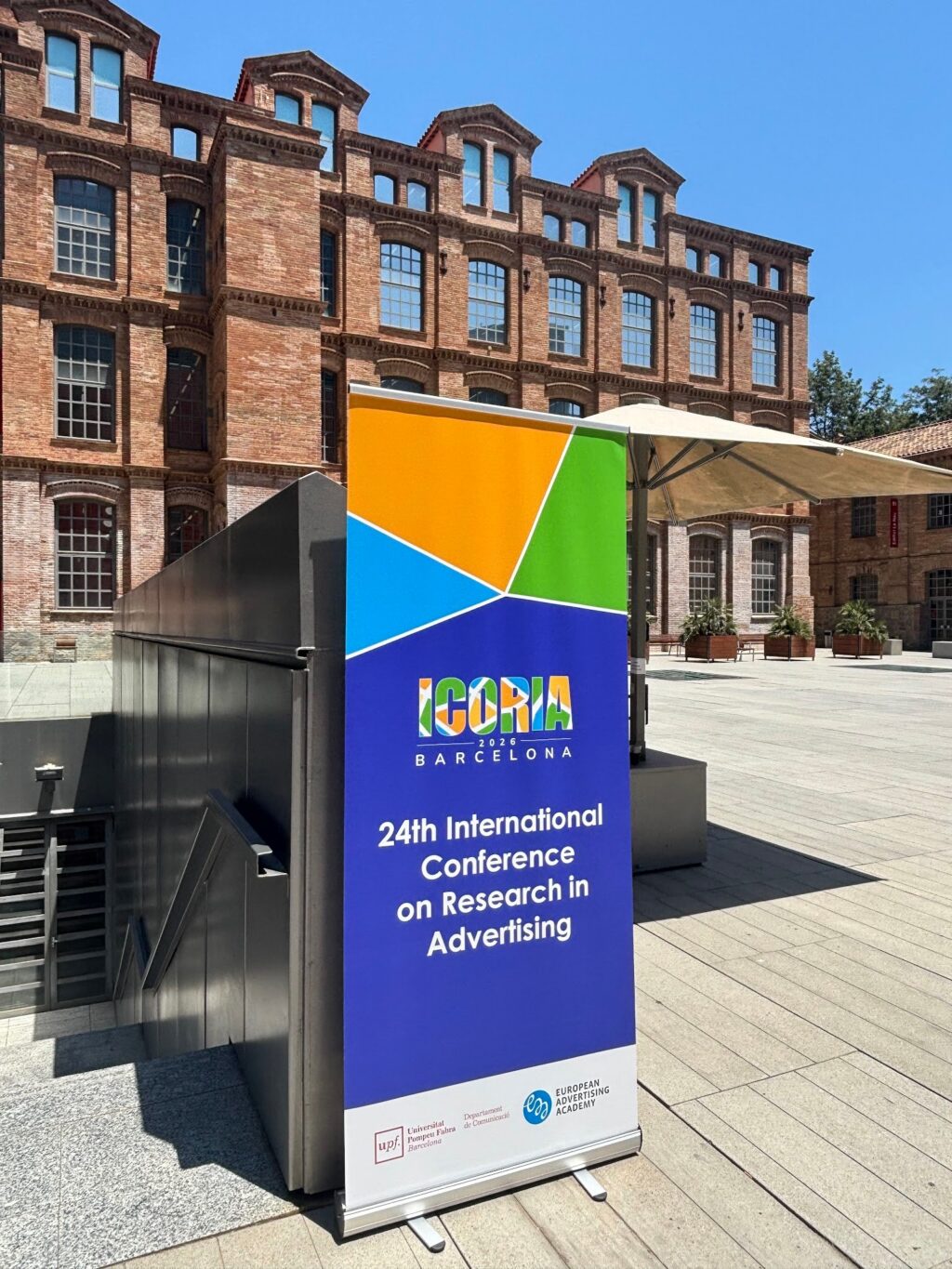
The 24th International Conference on Research in Advertising (ICORIA) took place from June 25 to 27, 2026, in the beautiful city of Barcelona, Spain. Hosted by the Department of Communication of Universitat Pompeu Fabra (UPF), this year’s conference brought together more than 230 advertising scholars, making it the largest edition of ICORIA to date.
Communicating Consumer Health and Wellbeing in the Digital Age
The theme of ICORIA 2026, “Communicating Consumer Health and Wellbeing in the Digital Age,” explored how advertising and communication can contribute to healthier societies, influence health-related decisions, and respond to the opportunities and challenges created by emerging digital technologies. The topic also closely aligns with the research priorities of the Communication, Advertising and Society (CAS) Research Group at UPF’s Department of Communication, particularly its research lines on youth, media and wellbeing, and health communication, led by the conference co-chairs Mònika Jiménez Morales and Yasmina Okan, respectively.
Pre-conference: Navigating AI in Advertising Research
The conference began with the highly timely pre-conference “Navigating AI in Advertising Research: From Ideation to Publication.” More than 80 participants attended practical demonstrations on the responsible integration of generative AI throughout the research process. The first session, chaired by Tobias Lagner, focused on using AI from research ideation to study design and included presentations by Jooyoung Kim, Tyler Milfeld, Julian Felix Kopka, and Joanna Strycharz, with Stefan Bernritter and Christina Boutsouki as discussants. The second session, chaired by Ray Taylor, explored the use of AI from manuscript drafting to publication and featured presentations by Colin Campbell, Eunjin Kim, and Jisu Huh, with Sandra Diehl and Shintaro Okazaki as discussants.
Doctoral Colloquium: Young Leaders in Advertising
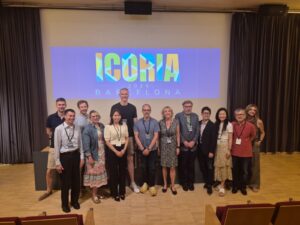
The pre-conference was followed by the Doctoral Colloquium, organised by Anastasios Panopoulos, which brought together more than 20 doctoral researchers for an afternoon of workshops and professional development.
Sessions covered topics such as navigating the publication process (Nikoletta Theofania Siamagka), chairing conference sessions (Yaniv Gvili), and career development, including Tyler Milfeld’s engaging presentation, “Top 10 Things I Wish I Had Known as a Doctoral Student.”
Keynote Session
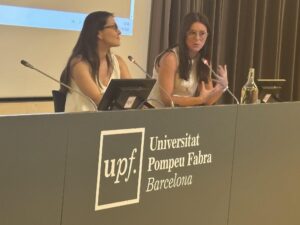
Friday’s programme opened with an inspiring keynote featuring Marta Santiago (Barcelona Health Hub) and Clara Nafria (Grove Agency & Woopdo).
Marta Santiago illustrated how strong narratives and collaborative innovation ecosystems can transform local health initiatives into internationally recognised success stories, using Barcelona as a case study. Clara Nafria then demonstrated how research-driven communication and AI-assisted interventions can reconnect people with meaningful real-world experiences and improve wellbeing.
Main Conference
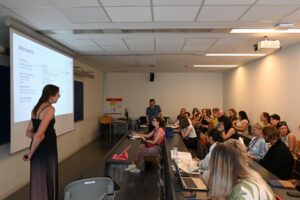
Across Friday and Saturday, participants attended parallel sessions covering a broad range of advertising topics. A total of 165 papers were presented across 45 sessions, reflecting the breadth and diversity of contemporary advertising research.
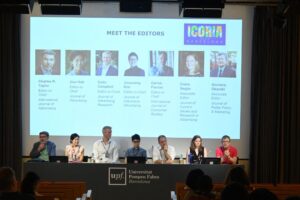
One of Saturday’s highlights was the popular Meet the Editors session, hosted by Vesna Zabkar (President-Elect, European Advertising Academy). Participants had the opportunity to engage directly with editors from several leading journals in the field, including Charles R. Taylor (International Journal of Advertising), Jisu Huh (Journal of Advertising), Colin Campbell (Journal of Advertising Research), Jooyoung Kim (Journal of Interactive Advertising), Carlos Flavián (International Journal of Consumer Studies), Claire Segijn (Journal of Current Issues and Research in Advertising), and Shintaro Okazaki (Journal of Public Policy & Marketing). The session offered valuable insights into the publication process, editorial expectations, and practical advice for preparing successful journal submissions.
Panel Discussion
Another major highlight was the joint AAA-EAA Panel Discussion, which examined how advertising can contribute to consumer health and wellbeing in the digital age. Panelists Sela Sar, Liselot Hudders, Ralf Terlutter, and Harsha Gangadharbatla discussed opportunities for developing more responsible and wellbeing-oriented advertising practices, particularly in relation to social media and workplace communication. The discussion was moderated by Sandra Diehl (President EAA), and Chang Dae Ham (President-Elect AAA).
Welcome Reception, Gala Dinner and Awards
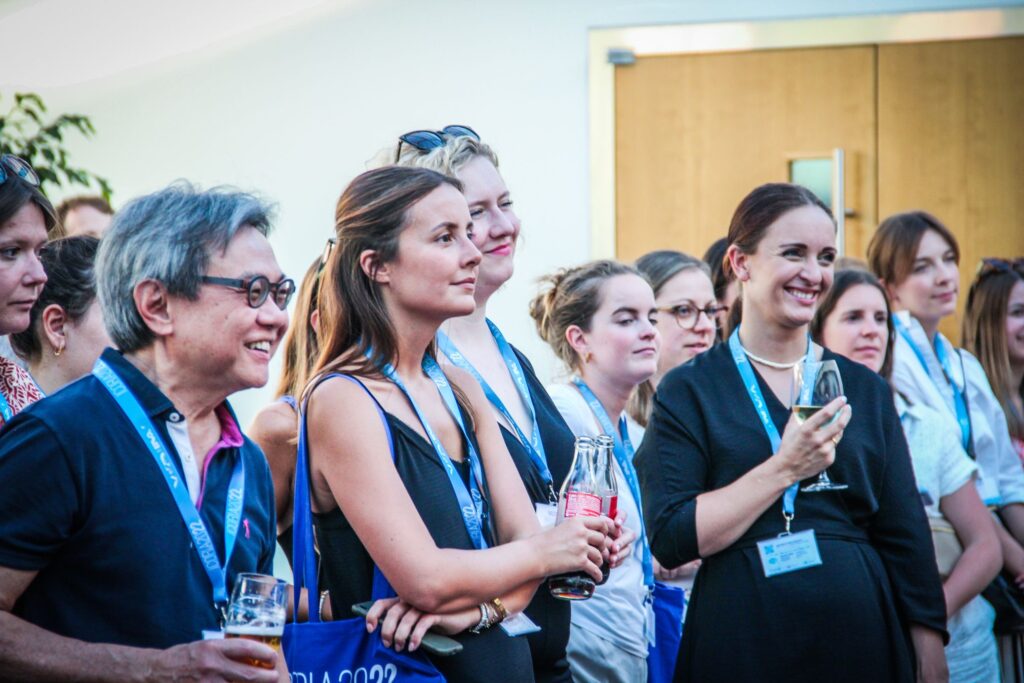
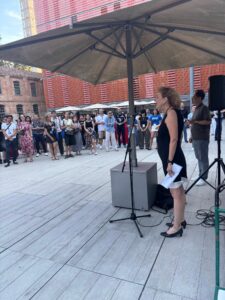
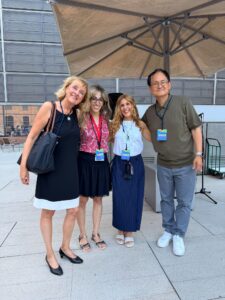
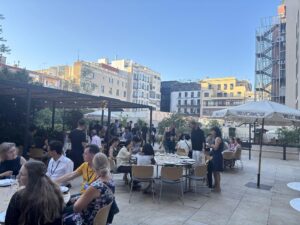
True to the ICORIA spirit, the event was as much about building community as it was about presenting cutting-edge research. The conference officially began with the Welcome Reception at UPF’s Plaça Gutenberg on Thursday evening, where participants reconnected and welcomed new colleagues.
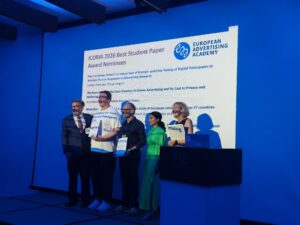
On Friday night, the traditional Gala Dinner & Awards was celebrated at the vibrant Traca Me Barcelona Restaurant in the heart of the city, celebrating excellence in advertising research. The Best Student Paper Award was presented to Steffen Prior and Tobias Langner for their paper “Practice Makes Perfect? A Comparison of Prompt- and Fine-Tuning of Digital Participants to Simulate Human Responses in Advertising Research.” The Best Conference Paper Award was presented to Eunjin (Anna) Kim, Kyomin Hwang, Hyeonjin Kim, Yun Kim, Junmo Koo, and Nojun Kwak for their paper “When Do Coupons Persuade? Experimental Evidence from Large-Scale Behavioral Data in Advertising.” In addition, the ceremony recognized recipients of the AAA–EAA Collaborative Research Competition Award, EAA Research Grants, and ICORIA Student Grants, highlighting the conference’s continued commitment to fostering excellence and collaboration within the advertising research community.
The conference concluded with the European Advertising Academy General Assembly, followed by a choice of two immersive social activities on Saturday evening: a historic tour through the Gothic heart of Barcelona or a modernist stroll tracking the essence of Gaudí down the iconic Passeig de Gràcia.
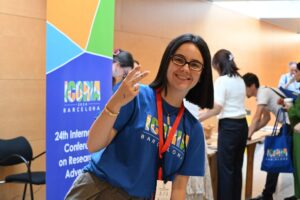
ICORIA 2026 would not have been possible without the dedication of the many student volunteers from Universitat Pompeu Fabra, whose enthusiasm and professionalism ensured that every aspect of the conference ran smoothly.
We would also like to thank all presenters, participants, reviewers, session chairs, and members of the organising committee for making ICORIA 2026 both intellectually stimulating and socially memorable.